Storage Media and Computer Technology
How does computers, internet and storage technology work in 2053?

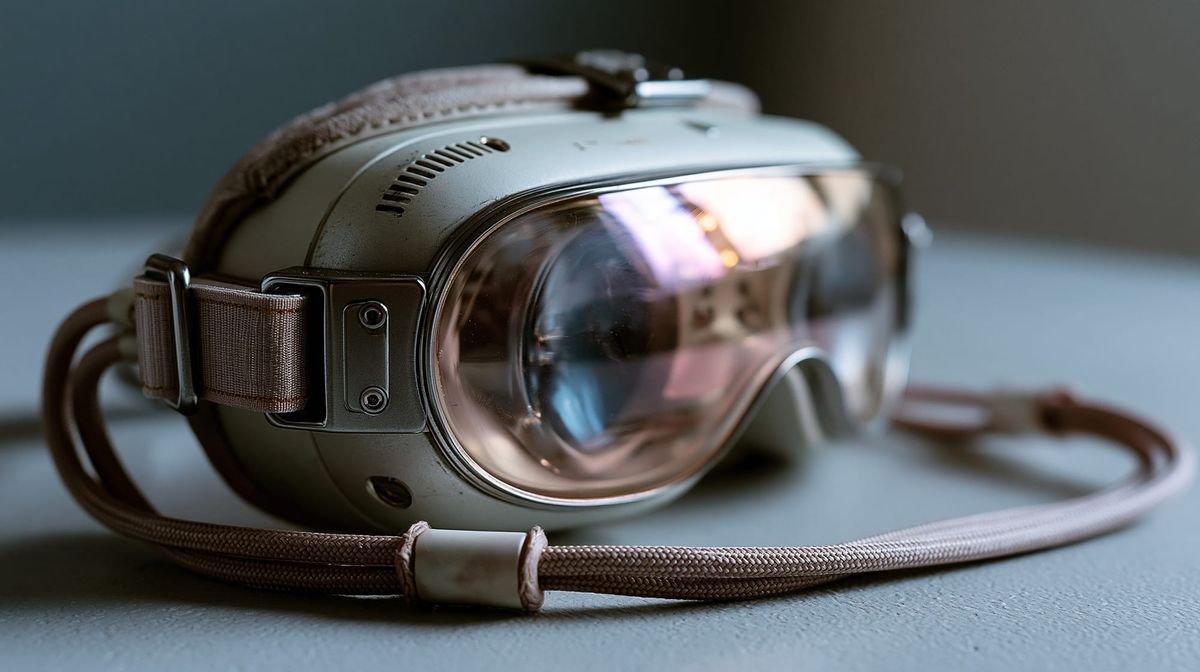
In the present day, we use flat screens and tablets. These devices are always connected to the internet. Content such as music, movies, books, and games is transferred primarily over networks.
Consequently, people rarely visit bookstores, libraries, record shops, movie rental stores, or similar places.
In contrast, the world of Imperial Norway in the year 2053 is quite the opposite. Books and magazines are printed on polymer paper. Music and videos are stored on analog Sapphire-Glass Optical Media called Glass Discs.
What do Glass Discs look like? Think of Sony MiniDiscs from the 1990s. For those unfamiliar with them, they were essentially tiny CDs housed inside translucent plastic cartridges.
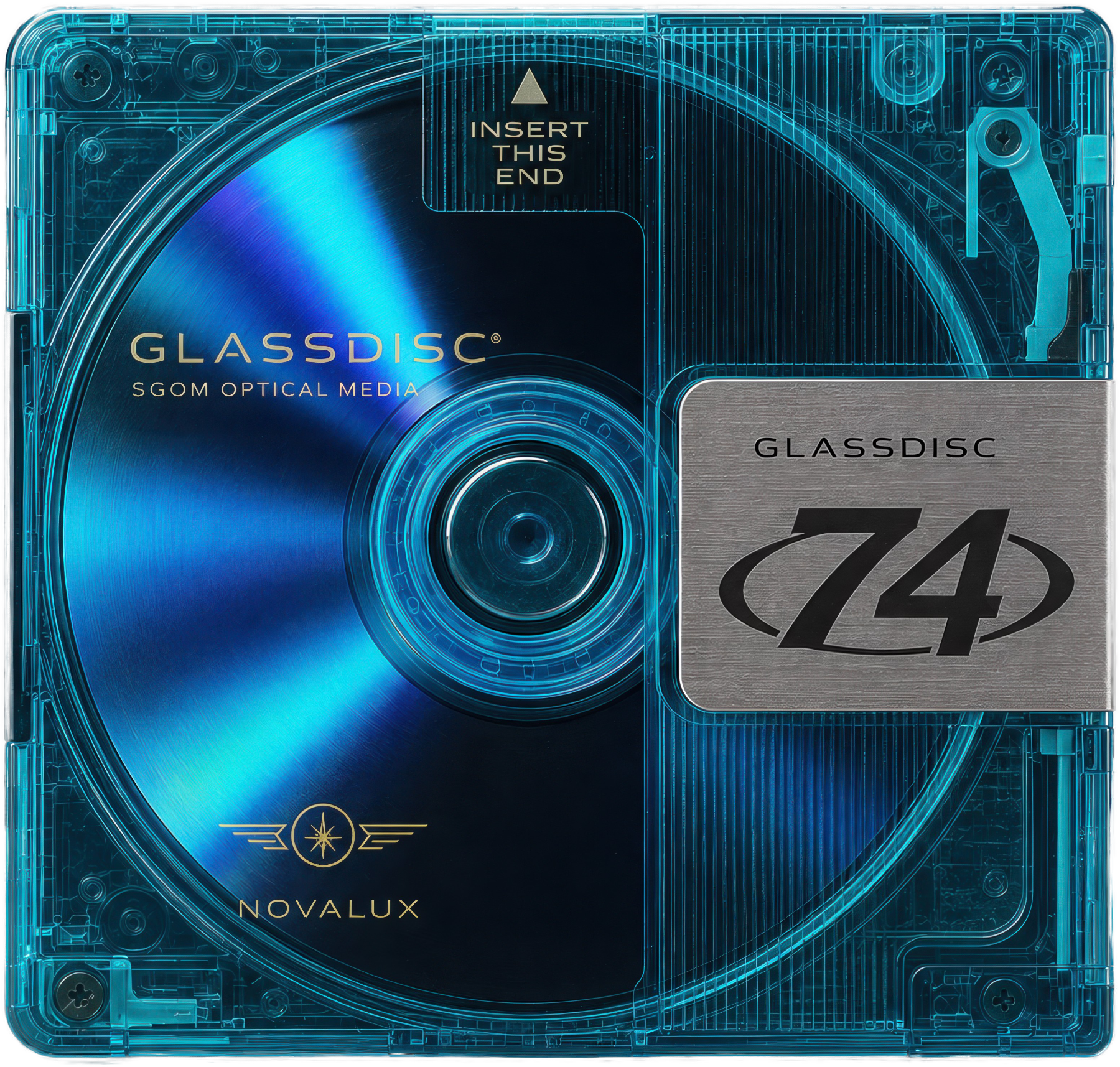
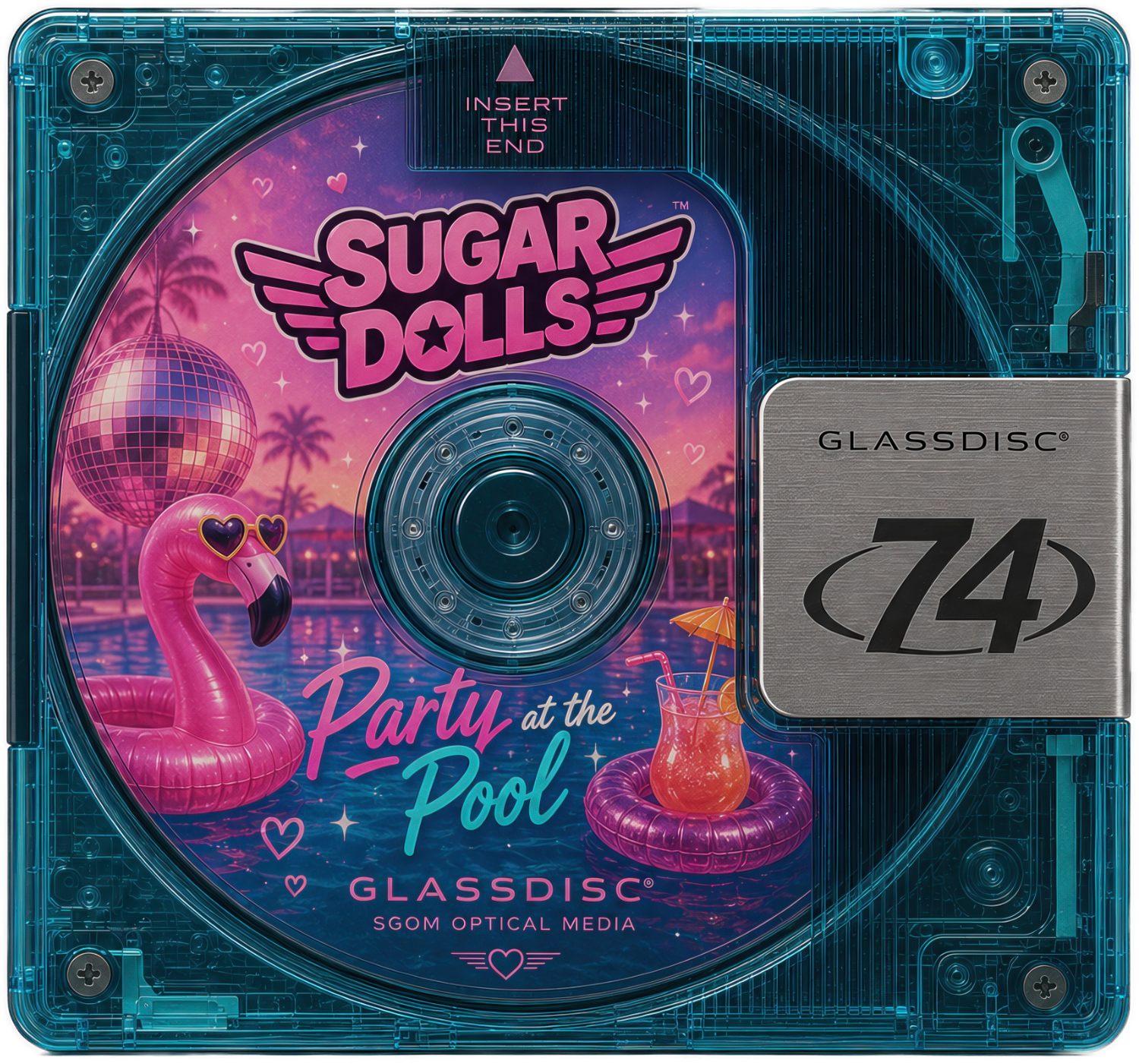
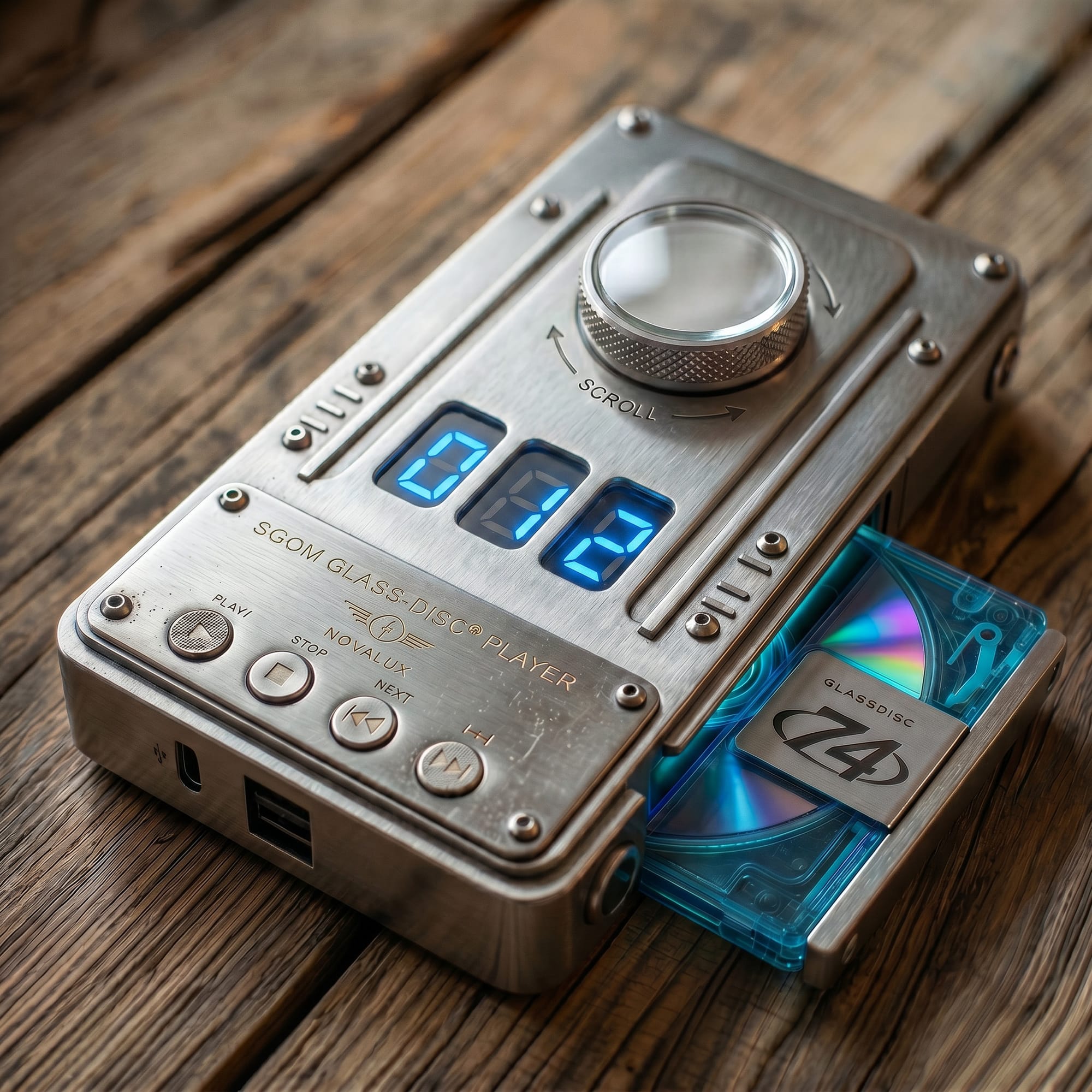
Examples of Glass Discs and a smart phone with a Glass Disc player
In other words, physical media has made a major comeback and once again dominates everyday life.
Software, however, is distributed using physical modules referred to as "bricks." These are not merely storage devices but electronic systems in their own right. Think of the cartridges used by Nintendo and other game consoles in the past.
Why Physical Storage Media?
Before getting into the details of how these media formats and devices work, it is useful to explain why the world of Imperial Norway in the 2050s evolved in this direction.
During the 2030s, several problems began to emerge:
- Pirate copying of digital media became almost impossible to stop.
- DRM solutions became increasingly onerous and frustrating for customers.
- People grew tired of managing countless passwords and PIN codes to access their content.
- Situations where people lost access to accounts—and with them family albums and other personal items—made many wary of companies controlling their media.
- Ever more complex digital interfaces, software dependencies, and bit rot caused people to lose access to treasured photos and videos after only a few years.
A counter-movement began to emerge. People started rediscovering something important about analog interfaces: they are stable and durable.
Photo albums from the early 1900s can still be viewed today. Consider the electric guitar. The quarter-inch mono jack plug dates back to around 1878, where it was originally used in telephone switchboards.
Compare the longevity of these analog interfaces with digital interfaces, which have changed repeatedly over the decades: RS-232, PS/2, SCSI, USB 1.1, FireWire, DVI, USB 3, USB-C, HDMI, Thunderbolt, and the list goes on.
As a result, people repeatedly discovered that they could no longer access old storage media because they lacked compatible hardware. Even when they could access it, the data itself might have become corrupted.
Analog formats were rediscovered because of their simplicity. Reading them in the future is much less problematic. There is no need to understand a long-forgotten encryption or compression algorithm. The information is stored in a far more direct form.
Novalux Glass Disc Storage
The company Novalux bet on the long-term advantages of analog formats.
Initially, their technology found use in military systems that required rugged storage solutions capable of remaining operational for decades. Their success in military applications eventually led to the development of the Glass Disc.
Glass Discs resemble Sony MiniDiscs from the early 2000s, but differ in one important respect: they are analog optical media rather than digital media.
Grooves are etched into sapphire glass, making the medium exceptionally durable. Data can remain readable for over two hundred years.
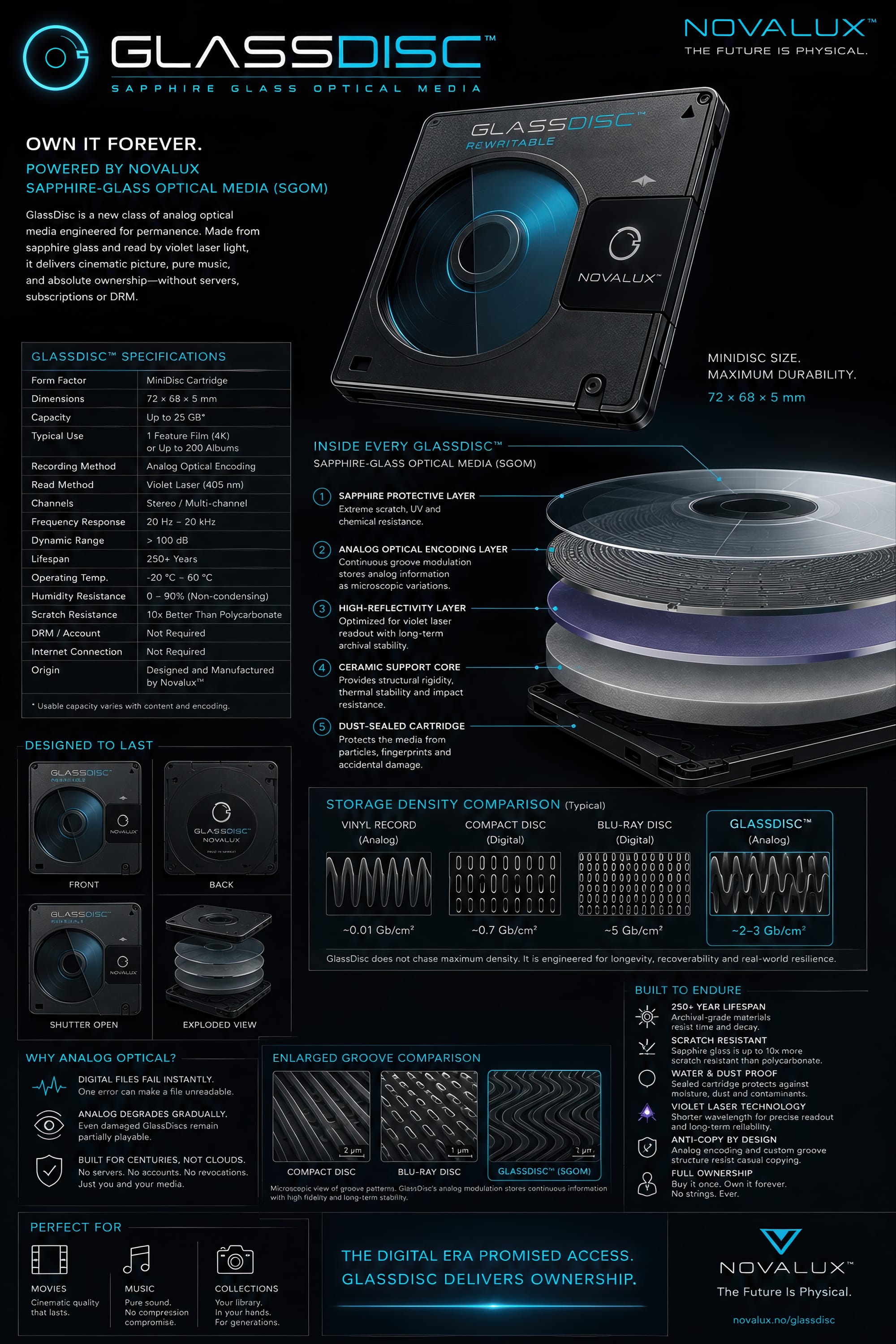
There is no compression or error-correction layer to interpret, making the format extremely straightforward to read. A Glass Disc does not suddenly become inaccessible because a future computer lacks support for a particular codec or file format.
The heavy reliance on passwords, account logins, and subscription systems gradually disappears because physical possession provides sufficient protection. Analog data cannot be copied perfectly, as each generation introduces minor degradation.
As a result, people can once again buy a song or a movie and genuinely own it. They can lend it to a friend, sell it, or keep it for decades. Forgetting a password or losing access to an online account no longer means losing access to purchased content.
With digital storage, a few corrupted bits may render an entire file unreadable. With analog storage, damage merely degrades a portion of the image or sound. A damaged section of the medium does not destroy all of the stored information.
For these reasons, much of the world embraces the Novalux solution.
Data Bricks for Software
A similar development occurs in software distribution.
Modules known as "bricks" are developed to address the problem of software piracy. Computers cannot directly read the internal contents of these devices. Instead, the brick functions as a small computer in its own right. The host system sends requests and receives responses.
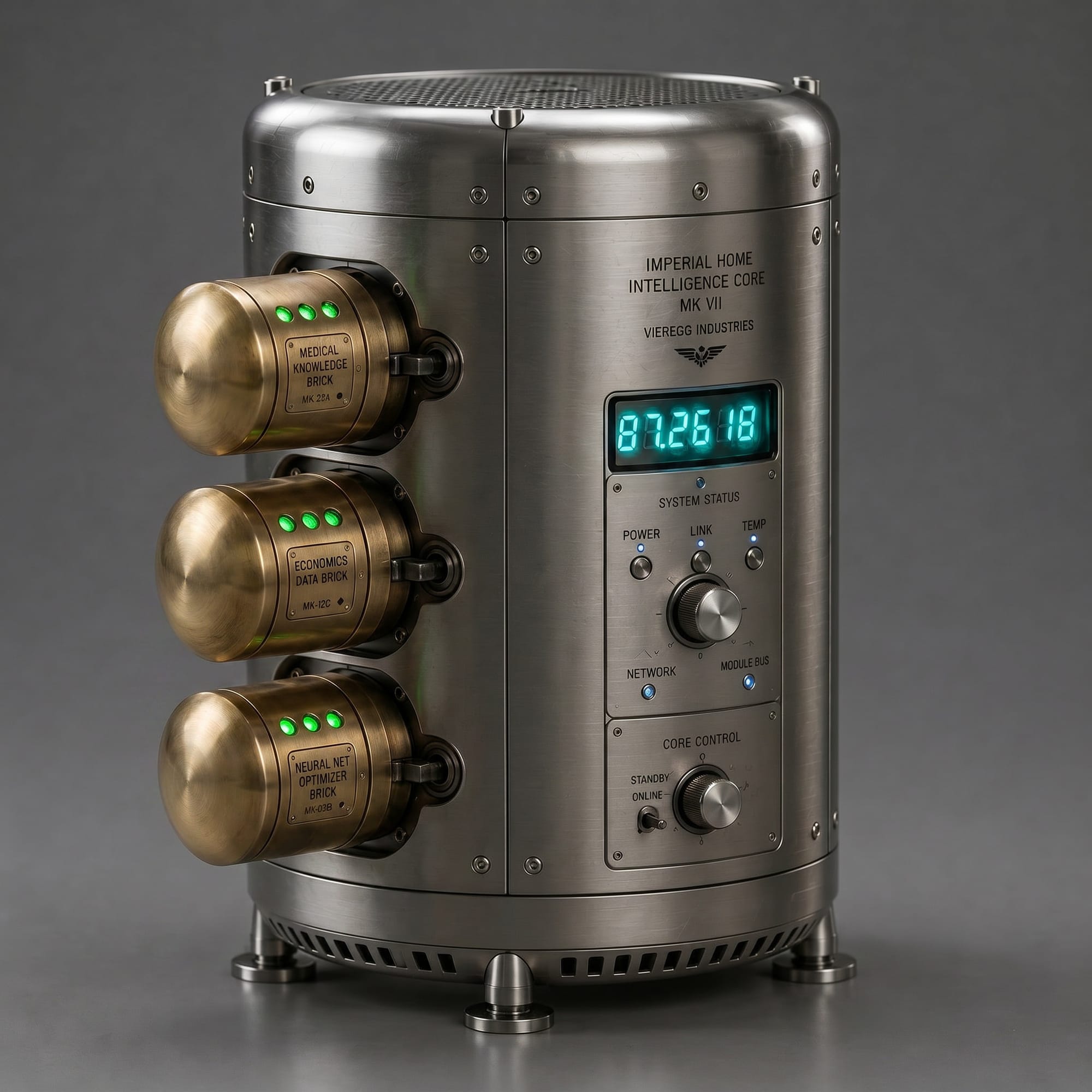
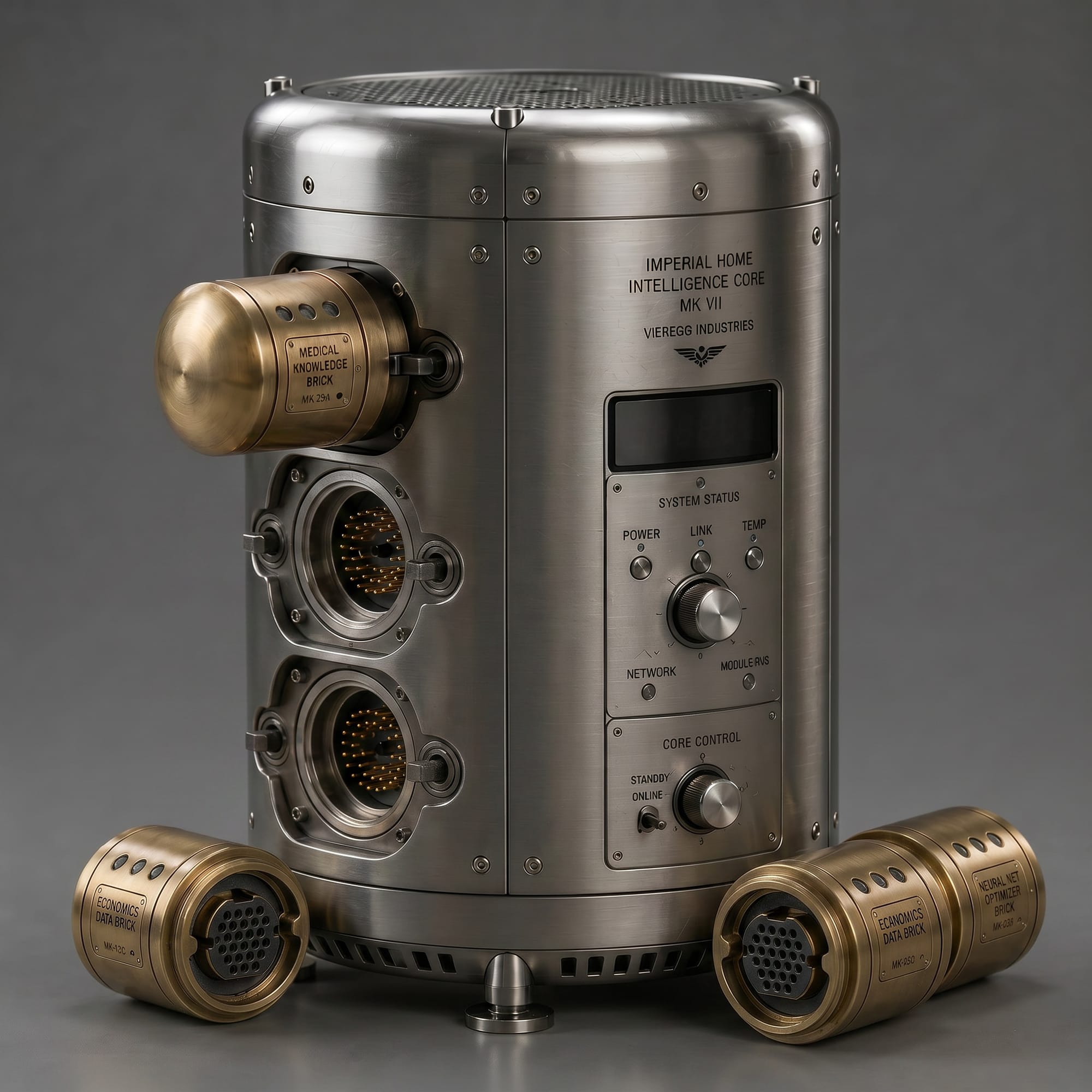
A computer with data bricks plugged in and unplugged.
The computer can ask the brick to perform specific tasks. For example, a Physics Brick may perform complex engineering calculations, while a Knowledge Brick may provide access to specialized databases.
What is actually happening inside the brick is concealed, making pirate copying extremely difficult. As a result, passwords and PIN codes become largely unnecessary. Physical possession of the brick itself serves as the primary form of protection.
Bricks come in several varieties:
- Skill Bricks — Analog or neural modules that provide specialized cognitive abilities. Examples include aerodynamics, engine tuning, and formal logic.
- Knowledge Bricks — Physical databases with query-only interfaces. Examples include medical literature, economic statistics, legal codes, and military manuals.
- License Bricks — Small dongles that unlock software or certify ownership. Examples include CAD suites, games, and professional credentials.
The Robotics and Drone Revolution
In the 2020s there was a drone revolution caused by the war in Ukraine. Both flying and wheeled drones controlled remotely and with partial autonomous driving with AI got perfected.
These drones, such as the Buddy-3 could deliver books, groceries, pizza and other smaller items very cheaply. Instead of moving a large hunk of metal such as a car with a human in them only a small unit is moved that requires far less energy.
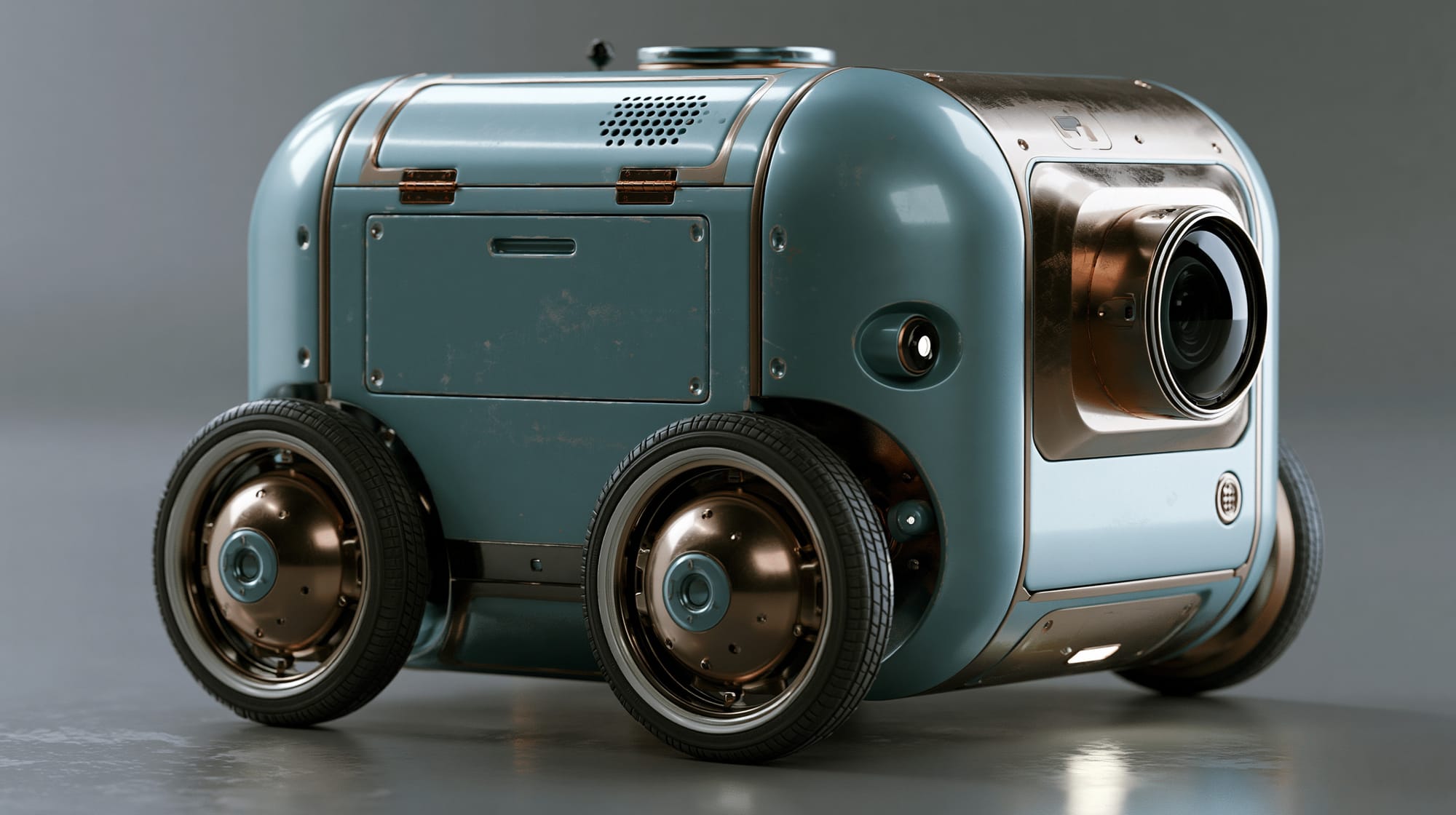
At the same time robots become plentiful in factories causing cost of manufacturing physical objects to fall. Thus in the 2050s physical objects are both cheaper to produce and deliver than in the 2020s, causing digital deliveries to be less necessary.
Small local on-demand manufacturing hubs exist allow long distance deliveries to be replaced by rapid local production of goods on demand. Browsing vast online categories of products because less necessary as local stores can produce a variety of products locally using local robots and 3D printers.
 Povel Vieregg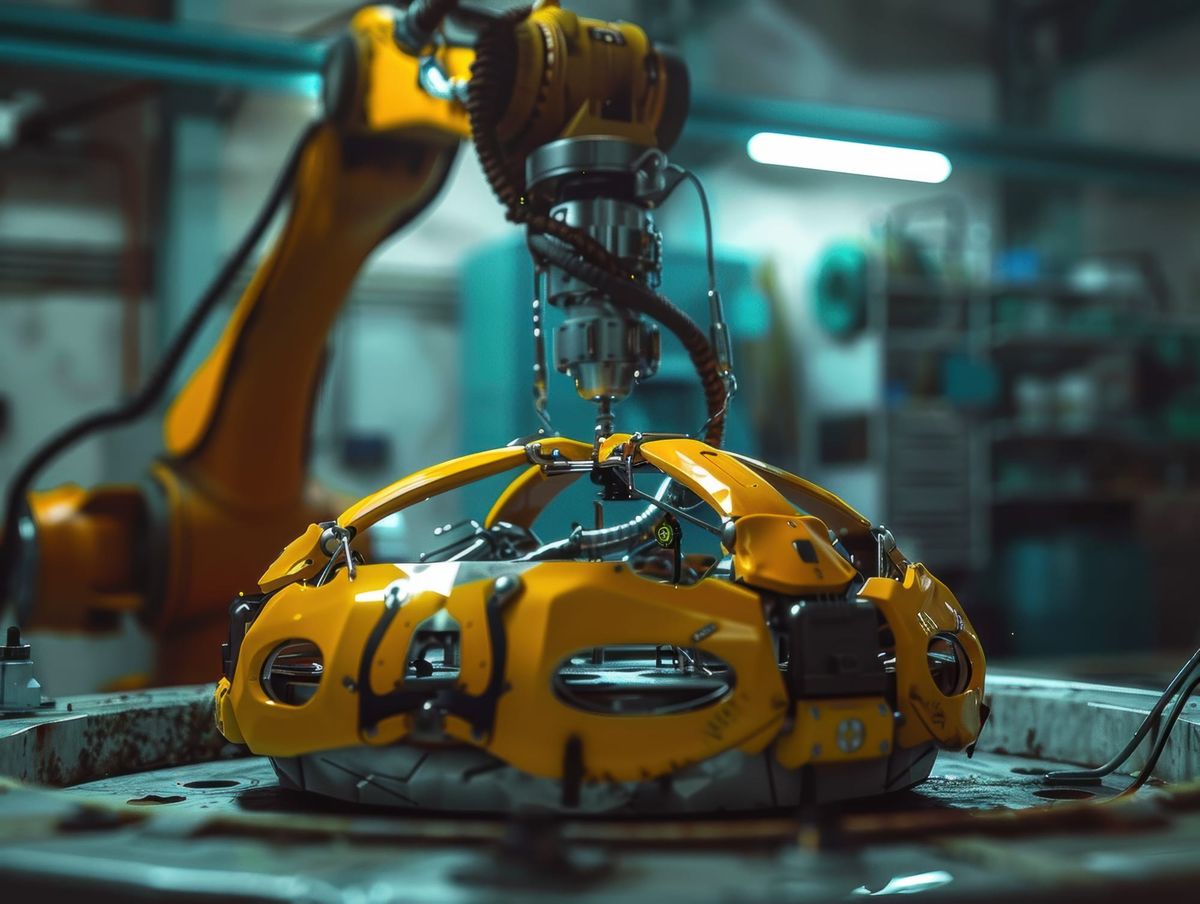
Author Note
As a storyteller, one of the goals is to create interesting worlds that allow interesting stories to happen.
I am reminded of a discussion about the television series Stranger Things, which is set in the 1980s. The creators explained how the absence of mobile phones helped the plot. When the kids became lost or found themselves in danger, a simple phone call could not instantly solve the problem. Had everyone carried modern smartphones, many of the show's conflicts would have ended before they began.
This is something I realised when thinking about future technology. If we simply extrapolate today's trends indefinitely, many stories become harder to tell.
Other science-fiction authors have faced the same problem. Frank Herbert encountered it in Dune and addressed it through the Butlerian Jihad, a historical event that prohibited thinking machines.
When writing, I try to adhere to the principles of hard science fiction:
One requirement for hard SF is procedural or intentional: a story should try to be accurate, logical, credible and rigorous in its use of current scientific and technical knowledge about which technology, phenomena, scenarios and situations that are practically or theoretically possible.
At the same time, I am not necessarily aiming for the most probable technological future. Instead, I choose a technological future that serves the story and then try to make that future as believable as possible.
The problem I wanted to solve is that, if current trends continue indefinitely, almost everything ends up happening through a screen. We order food through a screen. We read books on a screen. We listen to music, watch films, communicate with friends, and perhaps even do our jobs through a screen.
The physical world gradually disappears.
You no longer need to visit places. You no longer need physical objects. Everything becomes an interface.
This also affects storytelling. Police investigations become searches through cloud databases. Criminals exchange encrypted files rather than briefcases. A raid becomes a login screen.
But imagine trying to create a visually engaging story in such a world. Nobody leaves their living room. Physical locations lose meaning. There are no dark alleyways where smugglers exchange data modules. No dusty record stores. No video rental shops. No secret messages hidden in books.
I wanted a more physical world.
I wanted Nora and Tommy to walk to a video rental store and browse films together. I wanted Nora to visit a record shop and listen to the latest Sugar Dolls album. I wanted characters to unfold a newspaper, read a shocking headline, and hand it to a friend.
Certainly, similar things can happen using modern technology. Tommy and Nora could sit on a sofa browsing Netflix. They could send each other links. They could scroll through social media.
But visually and dramatically, I find that far less interesting than watching them move through real places, interact with real objects, and inhabit a world where physical things still matter.