Technology of Imperial Norway 2053
Let us look at the common technology we surround ourselves with today and how it differs in the world of 2053.

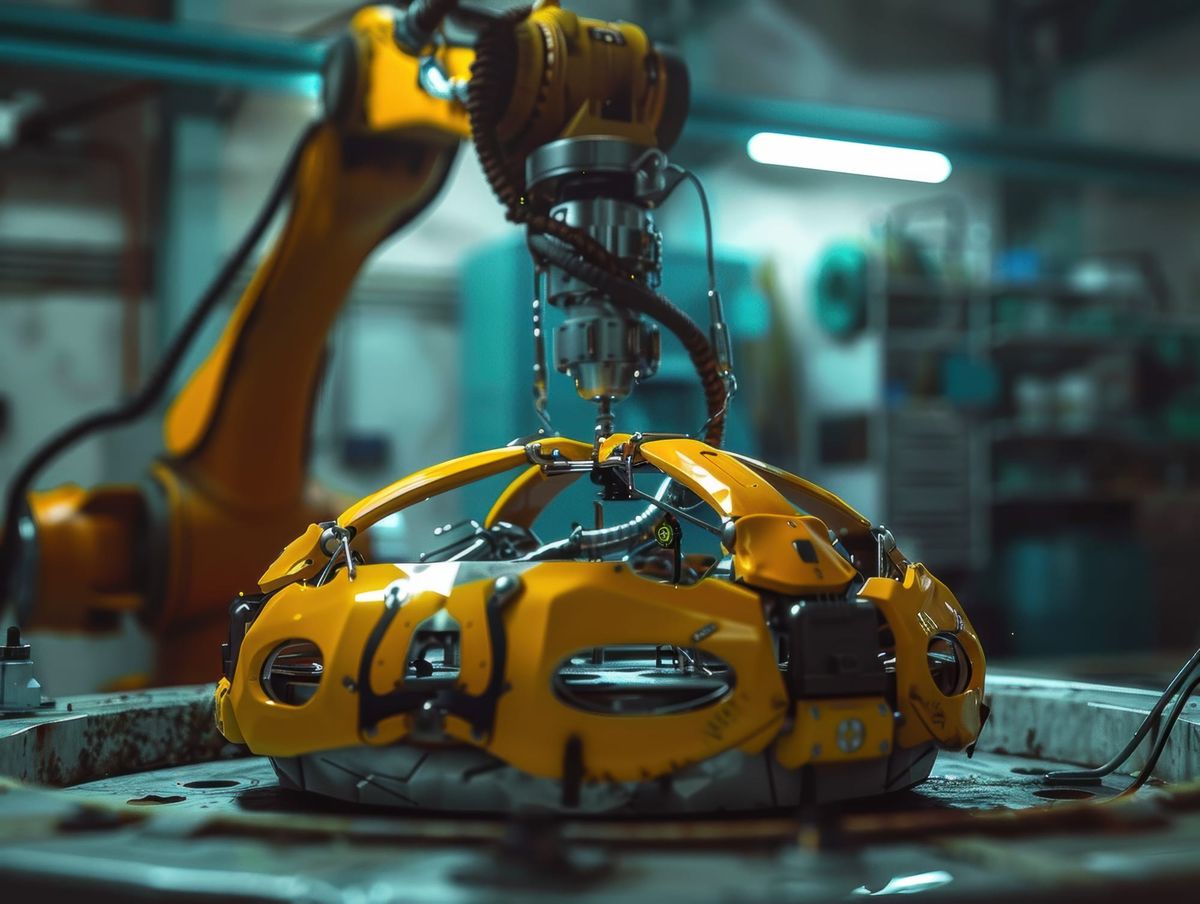
Imperial Norway 2053 is a world that has many similarities with our own, but which has number of differences still. Let us look at the common technology we surround ourselves with today and how it differs in the world of 2053.
Important note from a practical standpoint of story development. The descriptions I give here is primarily for the "known world." Regions of the world never covered in my story may use technologies I don't describe here. Because large nations such as China, India and Japan are not in my stories one can assume they might possibly have other unique technological solutions we don't know about. The same applies to South America, Southern Asia and Africa.
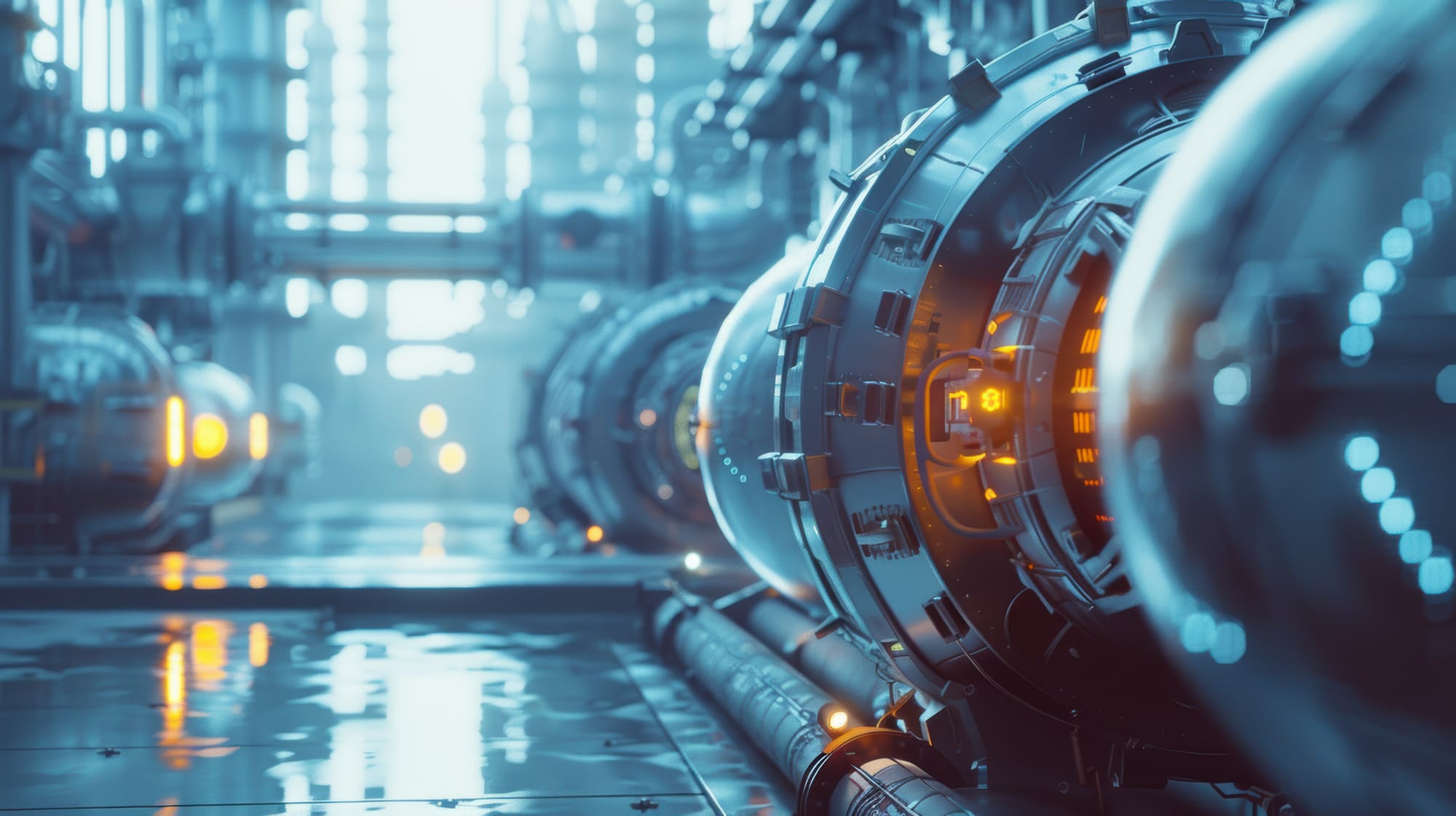
Power plants and Energy Generation
Fossil fuels are mostly phased out in this world. Imperial Norway is still an oil producer but it is mainly used for things like plastics rather than for cars or power plants. Coal plants and gas plants are not in operation anymore.
Power generation is dominated by renewable energy sources such as hydropower, wind turbines and solar panels. Intermittency is handled with a large variation of solutions. Some places use pumped hydro, others use iron-air batteries, but Small Modular Reactors (SMR) are also used. These differ from current Light Water Reactors (LWR) used today, in 2024. Instead, these SMRs are Molten Salt Reactors (MSR), High-Temperature Gas Cooled Reactors (HTGR).
The most prevalent users of Molten Salt Reactor and Hight Temperature Gas Cooled reactors is Novi Soviet. During occupation of Imperial Norway, they build several such reactors as Small Modular Reactors in Imperial Norway.
In colder climates such as Imperial Norway, geothermal heat is used in winter for heating.
Ammonia is widely used to power ships and airplanes.
Ethanol has a period in the transition to green energy where it got widely used. Cellulosic Ethanol (from forests) got developed allowing to more efficiently produce Ethanol without using food areas. Also Gulf states used solar power to produce hydrogen being combined with various petrochemical processes producing CO2 to produce Ethanol (needs hydrogen and CO2).

Cars and Land-Based Vehicles
Most land-based vehicles in the Imperial Norway 2053 world are electric-based, typically using Sodium-ion batteries. In Imperial Norway, itself, there is a prevalence of Aluminum-Air batteries used in military style vehicles. Imperial Norway, being thoroughly militarized, has a lot of gear designed for dual usage of military and civilian use. Large heavy armored cars and trucks are prevalent and these use Aluminum-Air batteries. These are pricier but very high-capacity batteries.
However in the past Ethanol Steam-Electric cars had been widely used. They solved problem with batteries in the transition period: Getting long range required big batteries. But by making a hybrid car, the steam engine provides range with ethanol as fuel. Since most trips were done electric, the demand for ethanol became 90% less than for fossil fuels.
This past means there are still older ethanol steam-electric hybrid cars around in Imperial Norway. Often used by enthusiast such as Idun Amalie Wang.
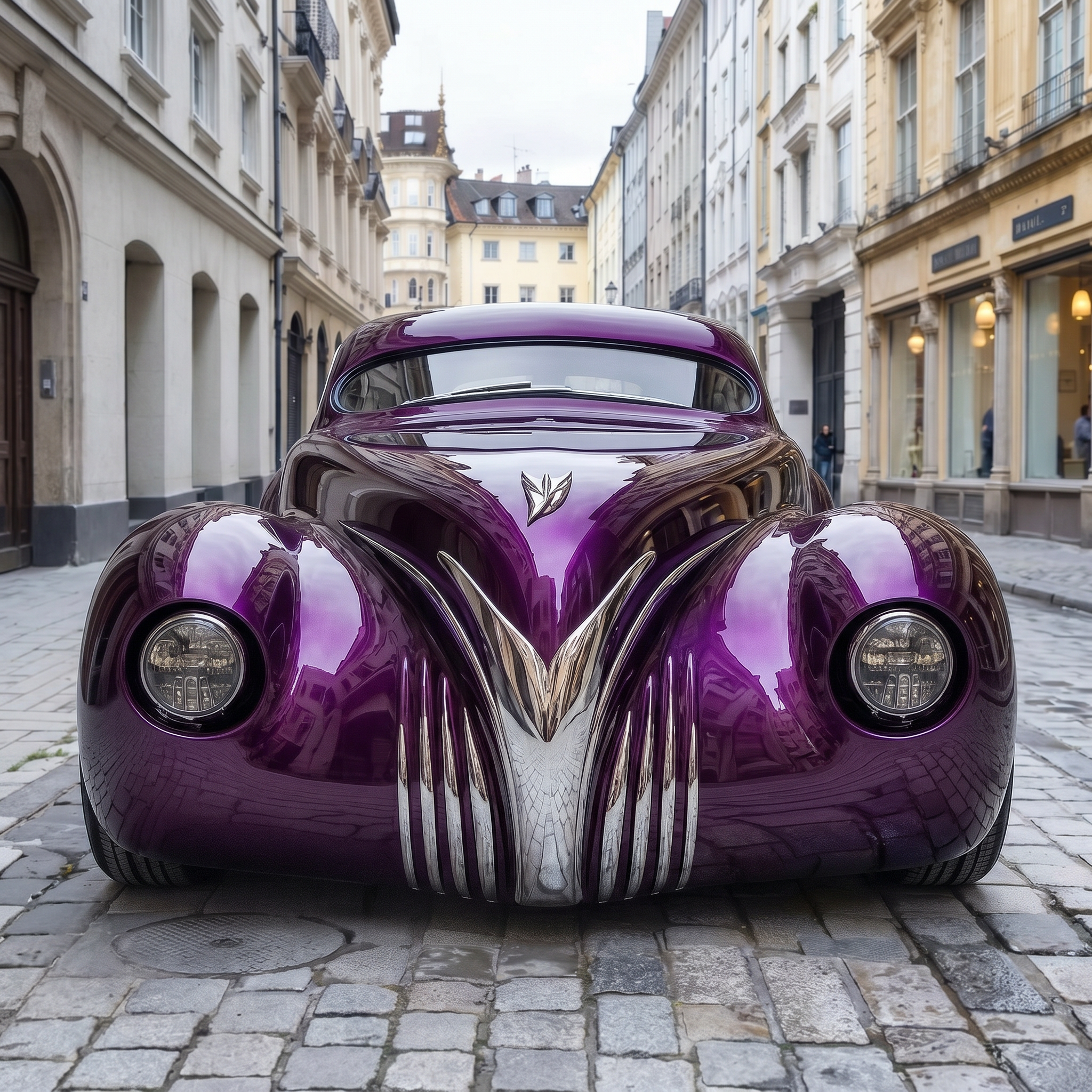
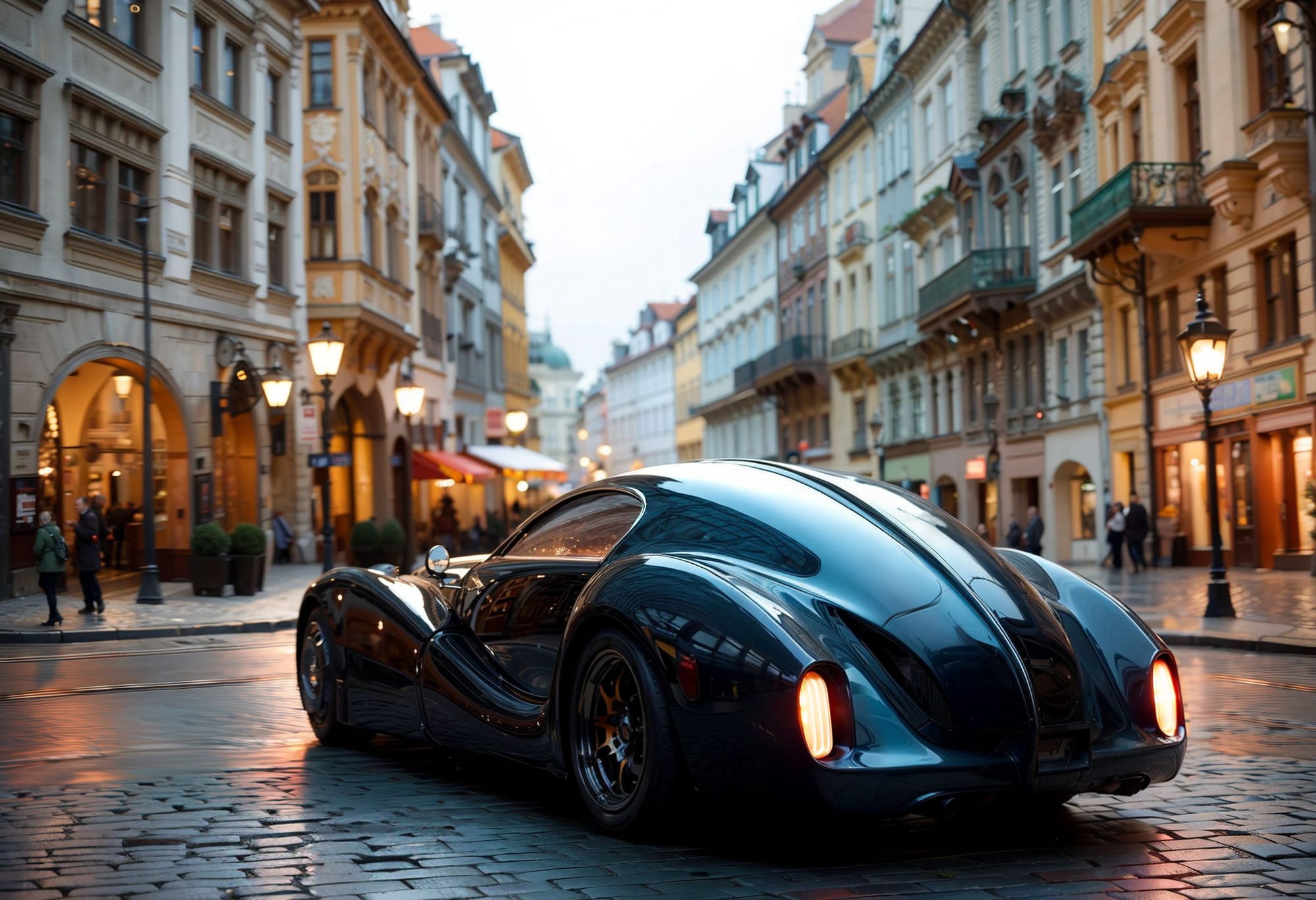
Kambo Efje and Vereide V-45 Valkyria Lux are both ethanol Steam-Electric cars
Neo Dixie is quite different because it is a weakly functioning state dominated by gangs setup in a feudal society. Thus, Neo Dixie has post-apocalyptic characteristics in many areas. That is one of the reasons Neo Dixie use steam -hybrid vehicles. They have electrical motors and batteries with a steam engine generator to recharge or extend range. These vehicles are very flexible in fuel sources. Almost anything that burns can be used. However, cellulosic Ethanol is widely used. This is Ethanol made from the parts of edible crops which we humans cannot consume.
Neo Dixie has numerous farms and thus a high production of cellulosic Ethanol as it is a very practical fuel. Non-toxic, can be used in portable stoves, for disinfection, heating and steam-hybrid vehicles. A popular steam-hybrid vehicle in Neo Dixie is the Psion steam-hybrid truck.
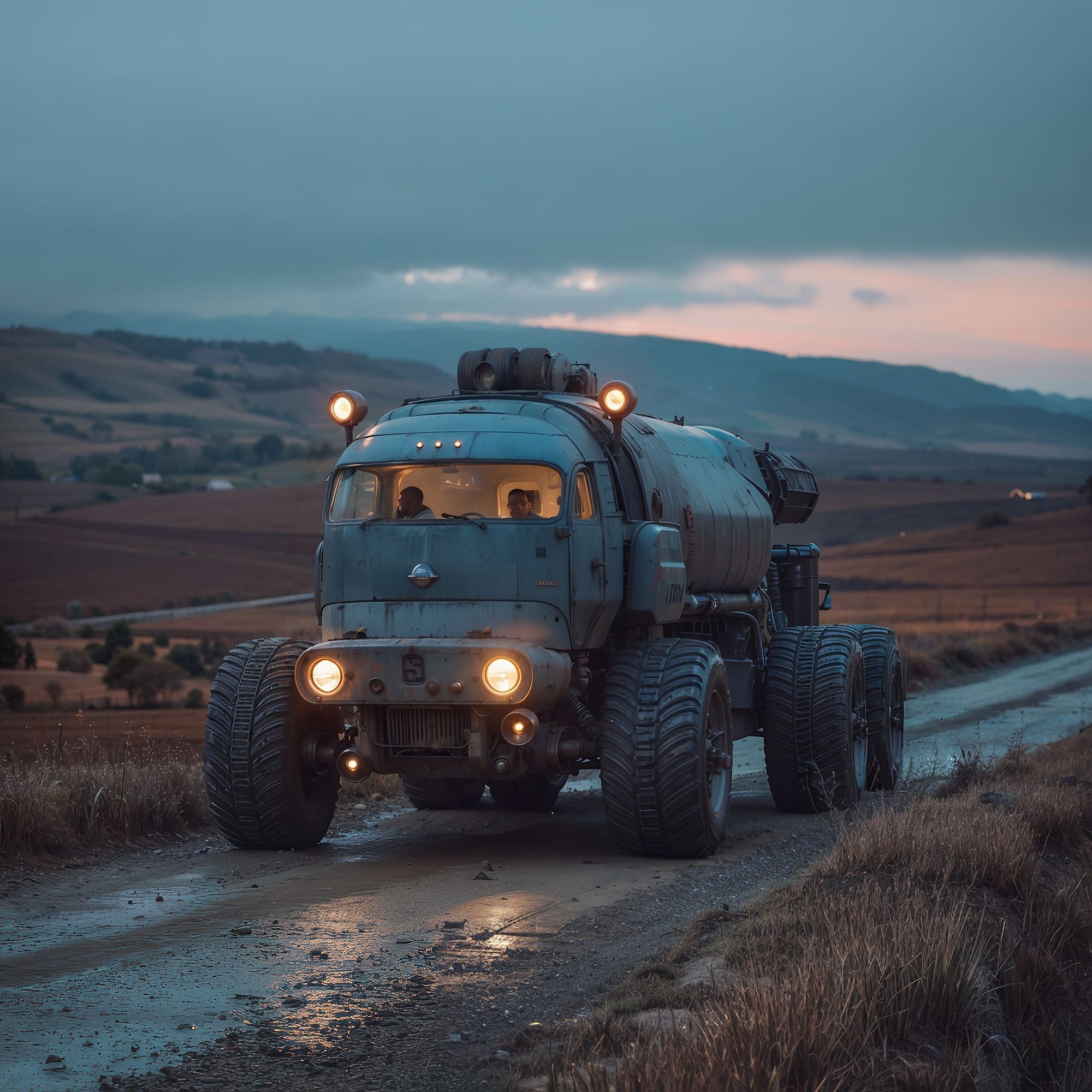
Many people in Neo Dixie have prepper mentality wanting to avoid reliance on the government and be able to be self-sufficient, which has affected various technological choices.
Airplanes and Airships
Airplanes have transitioned to using ammonia as fuel, which is less efficient than kerosene but practical to use in the more renewable energy-based economy that exists in 2053. But as this transition happened, there were many competing ideas. Smaller battery-based airplanes are used for short-distance travel.
Others decided to place their bets on airships. The Zeppelin company in Friedrichshafen in Germany began building large airships again. By using modern materials such as carbon fiber composites and electric motors powered by hydrogen fuel cells, they were able to build more cost-effective and efficient designs than in the past.
Airplanes are limited in size by their wingspan. Make wings too large and the forces on the body will be too stronghold wings in place. Thus, airplanes in 2053 are not different in size from today in 2024.
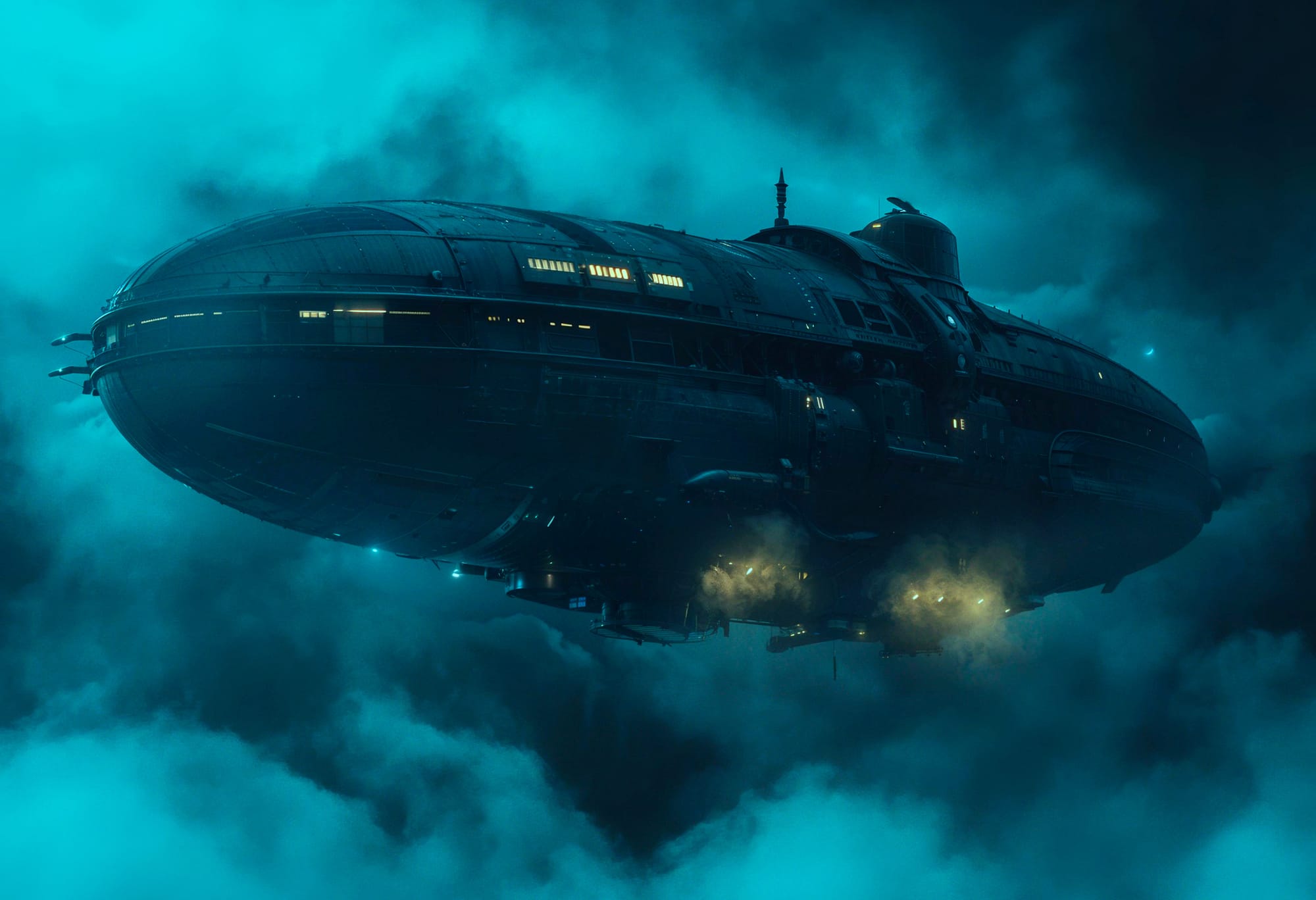
Airships have no such size limitations, as they can grow in all directions without structural strength problems. Thus, 2053 is an age with absolutely enormous airships. These are hydrogen airships with an out buffer of nitrogen gas to protect against fires. Hydrogen is not merely used for buoyancy but also to power hydrogen fuel cells. Inside a Zeppelin, there are multiple balloons called ballonets filled with hydrogen which provide the buoyancy. Thus, no complicated system with compressed hydrogen is required. This is why airships use hydrogen directly instead of ammonia like airplanes.
Airships are primarily built in Germany and due to Imperial Norwegian control of Germany, they are the ones to control most of the airships in the world. Imperial Norway has corporations which fly commercial flights using airships, but airships are also an important part of their military force.
Airships may seem stupid for the military, but they work more like hangar ships. They are protected by a large number of scouting drones sent out head to spot enemies. Airships have powerful laser canons to shoot down incoming missiles. Due to the sheer size of airships, they have a platform for sending out large drones piloted by crew members on the airships.
Airships are not moving into new territory without drones having disabled anti-aircraft systems. Airships are also large platforms for launching missiles which can take out distant targets.
To handle commercial airship traffic, main cities have built special airship docking towers. Imperial Norway itself is special in that it has airship docking towers, the so-called Imperial Towers, scattered all over the country. Norway due to its size and mountainous terrain, is not suited for land-based transportation. For this reason, cargo transportation, troop transport and passenger transportation is frequently done by airships.
Small Autonomous Vehicles
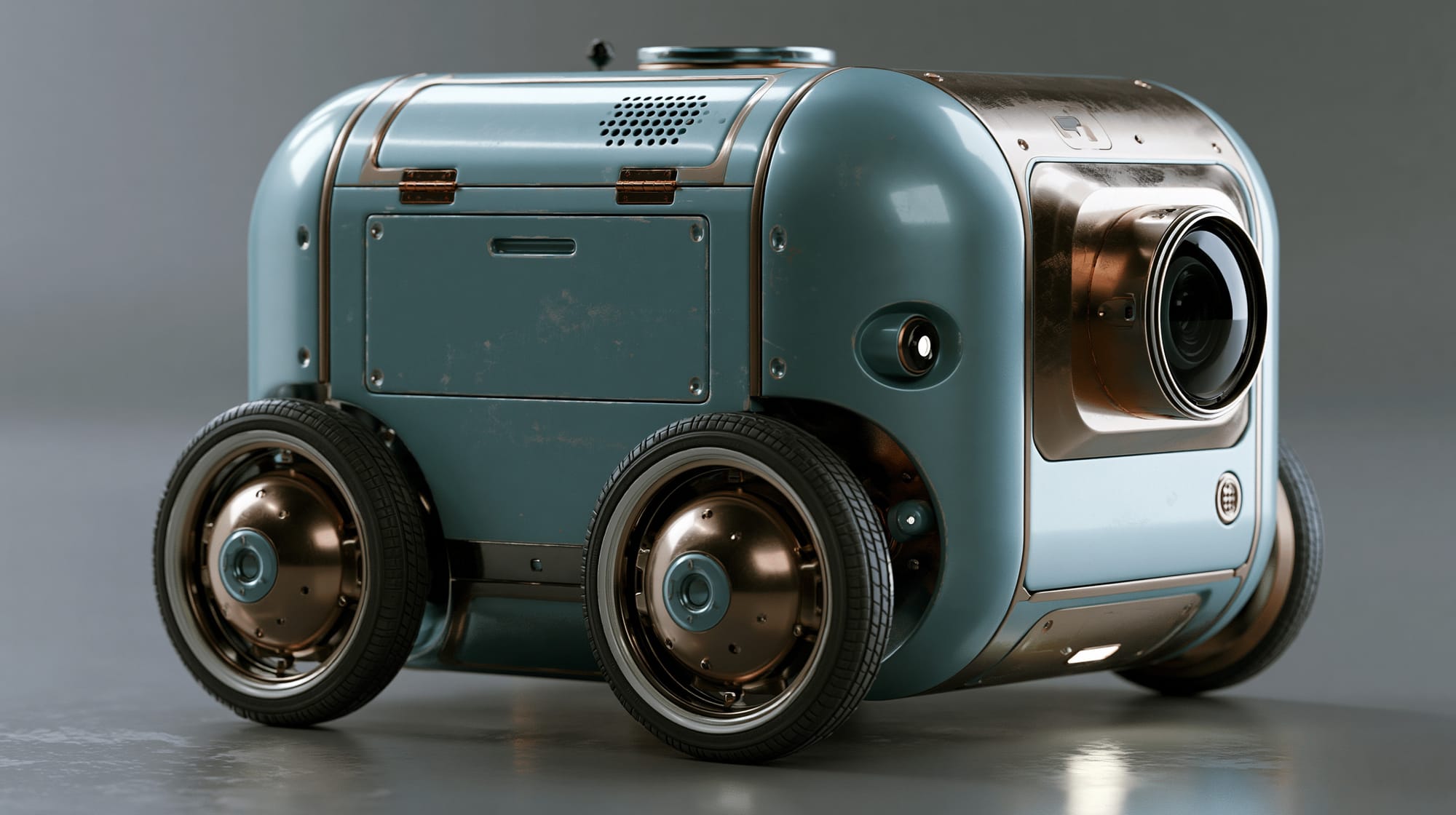
Fully autonomous or semi autonomous vehicles travel around towns delivering groceries, restaurant meals, books, newspapers and other smaller items to customers. The larger vehicles may even deliver things like furniture or home appliances. The smaller vehicles will drive on pavement at low speeds.
Androids
Human shaped robots which can walk around and do tasks completely unattended does not exist in the world of Imperial Norway 2053. But semi autonomous robots which can be controlled by human operators exist. They are not widely used as they are relatively expensive to make still. But Androids are still significantly more prevalent than today in 2024.
Androids are primarily used in the most hazardous environments. It can be dangerous military operations, industrial waste handling, nuclear reactors work and similar.
Houses and Buildings
Houses and buildings have not changed considerably in technology with some exceptions. 3D building and robot based construction if more common for houses in this world. Thus rapid construction of houses at lower costs are possible. Engineering wood for house construction is also more widely used.
Imperial Norway has the more unique buildings. Imperial Towers are mega structures made of heavy blocks of stone and concrete. They have multi-purpose function. In addition to being airship docking ports they are also flak towers to shoot down enemy airplanes. Inspiration is from Nazi Germany flak towers. These structures were near impossible to destroy, which is why many still exist in Germany till this day.
Imperial towers store large amounts of ammunition, food and other supplies. They work and shelters in war and house even war factories and various government functions and military installations and personnel.
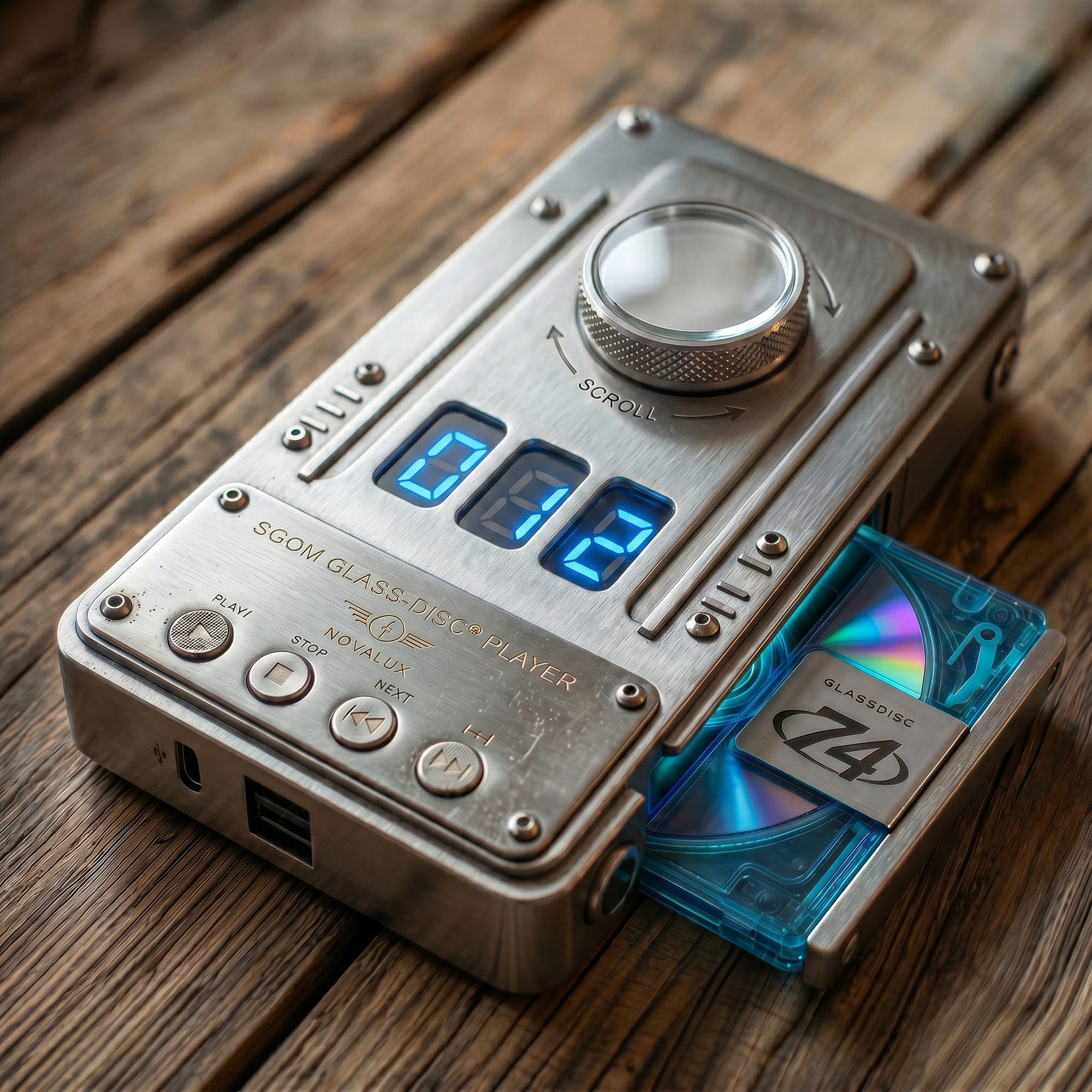
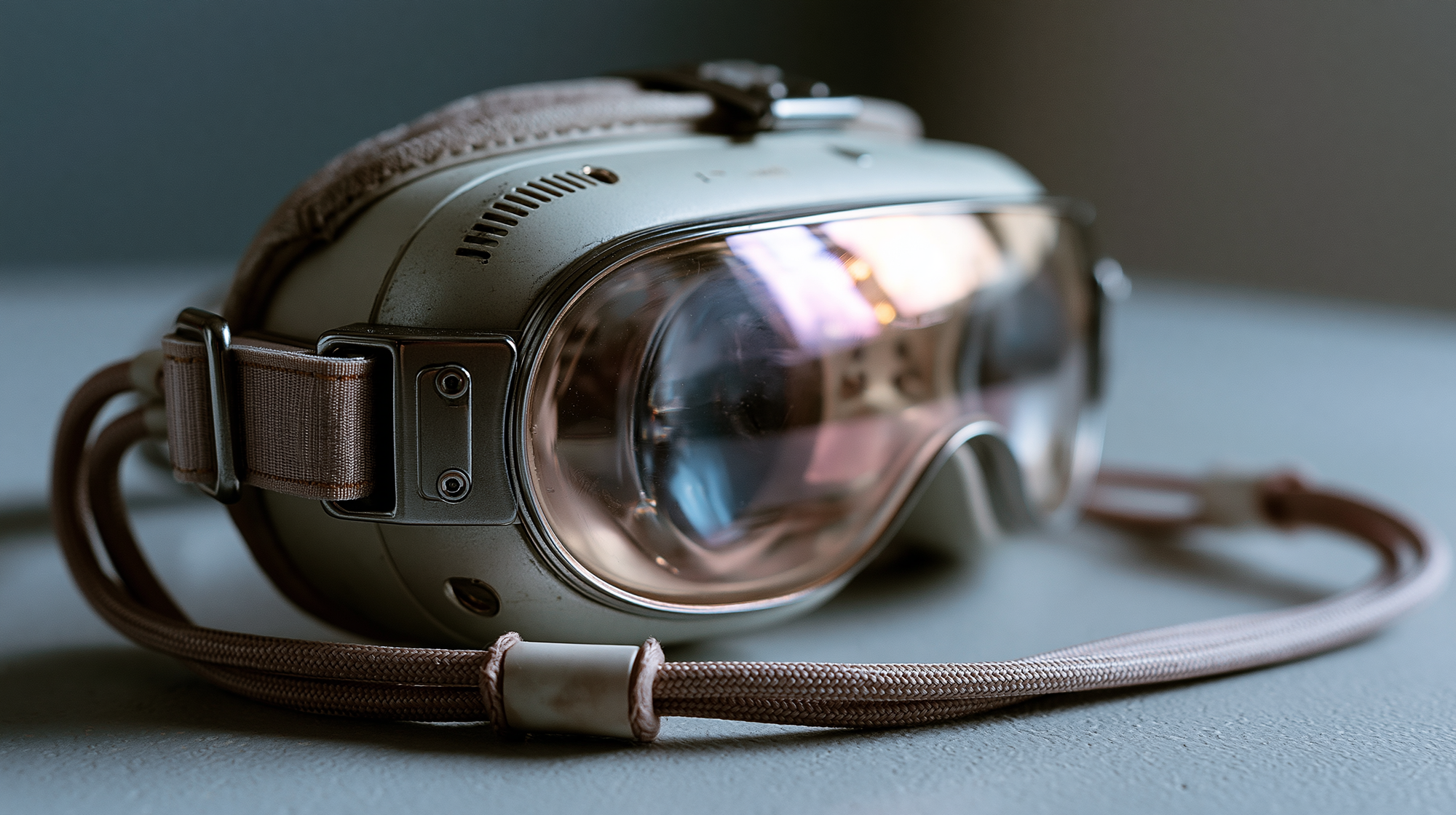
Hugin Raven AI Phone with slot for Glass Disc on left. Nordsyn Sight-3 AR Goggles on the right
Electronic Devices
In the world of Imperial Norway 2053, flat screens are not as widely used as today. Instead Artificial Reality goggles have taken over. These are headsets covering your eyes to display images and videos. Interfaces are built more around voice control as AI systems have advanced considerably. Actual general intelligence AI systems still don't exist. AI has not fully replaced humans but rather serve specialized purposes.
Thus people don't watch TVs on large screens but through goggles. For surface based display a special kind of portable projectors are used instead as they are able to show images on nearly any surface.
The Internet
Yes, the internet still exists, but in a different form. Since interfaces are more voice controlled one isn't clicking around with buttons and navigating. Instead one interacts with voice and will get images, videos and animations back in response as needed. Interacting with the internet is more like watching a movie which changes as you speak to display things you are interested in.
Music, video and software is however not distributed to the same extend over the internet in the 2050s as today. Rather physical media such as Glass Discs and Data Bricks are used more as explained in article below:
 Povel Vieregg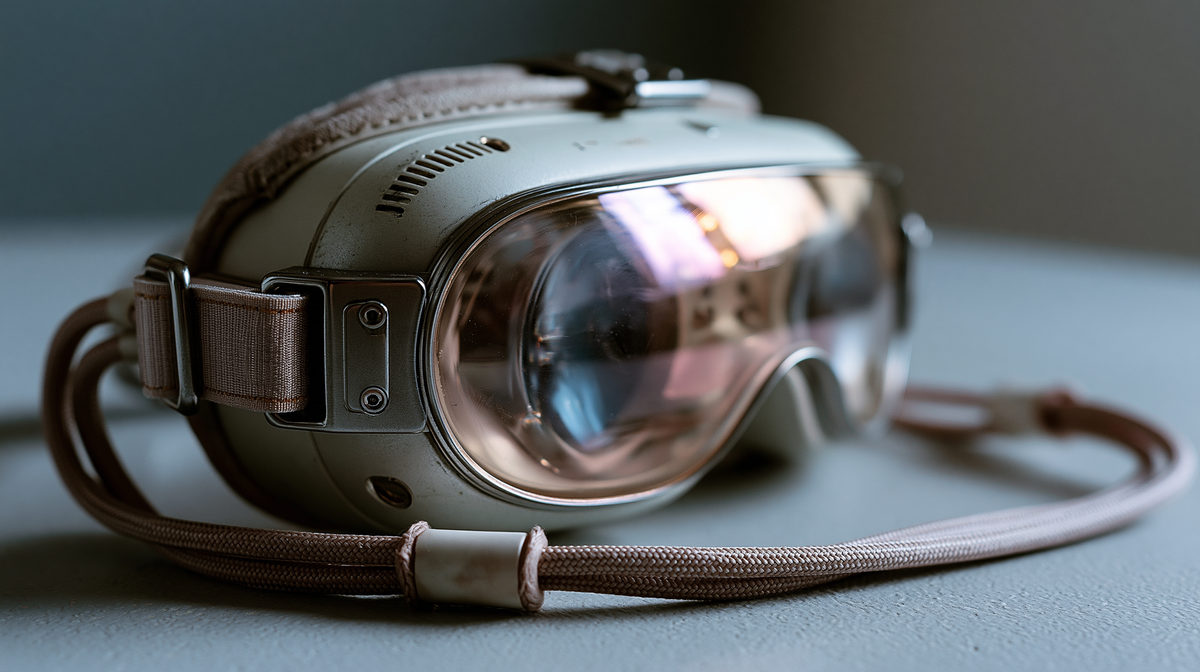
Printed Media
While 2053 is more modern than our world it is also regressed in other senses. In the late 2020s and early 2030s a backlash against flat screen based entertainment and lifestyle began. it began with schools bringing back books. Many people started embracing a non-electronic lifestyle which caused a renaissance for book stores, libraries and printed newspapers.
Paper technology has changed however. They use a recyclable polymer based paper, basically a form of plastic paper. It is water proof and tear resistant.

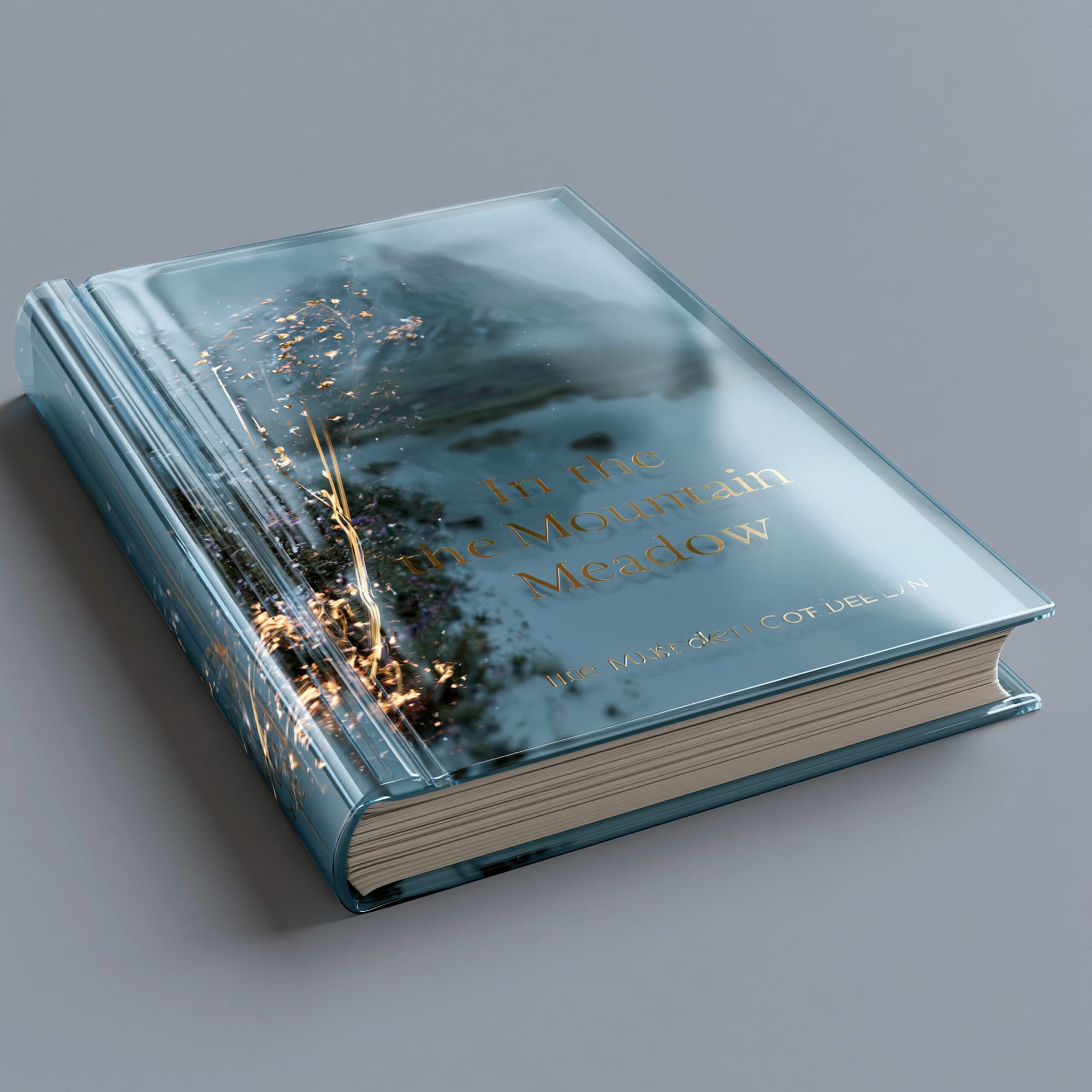
Books with polymer paper used in Imperial Norway 2053
Books and papers are however generally made on the spot on demand. Local fully automated print shops exist which use small autonomous vehicles to deliver books and newspapers to people. Many houses or local communities have their own book and newspaper making devices to make books or newspaper on demand ordered from the internet.
Analog Media for Movies and Music
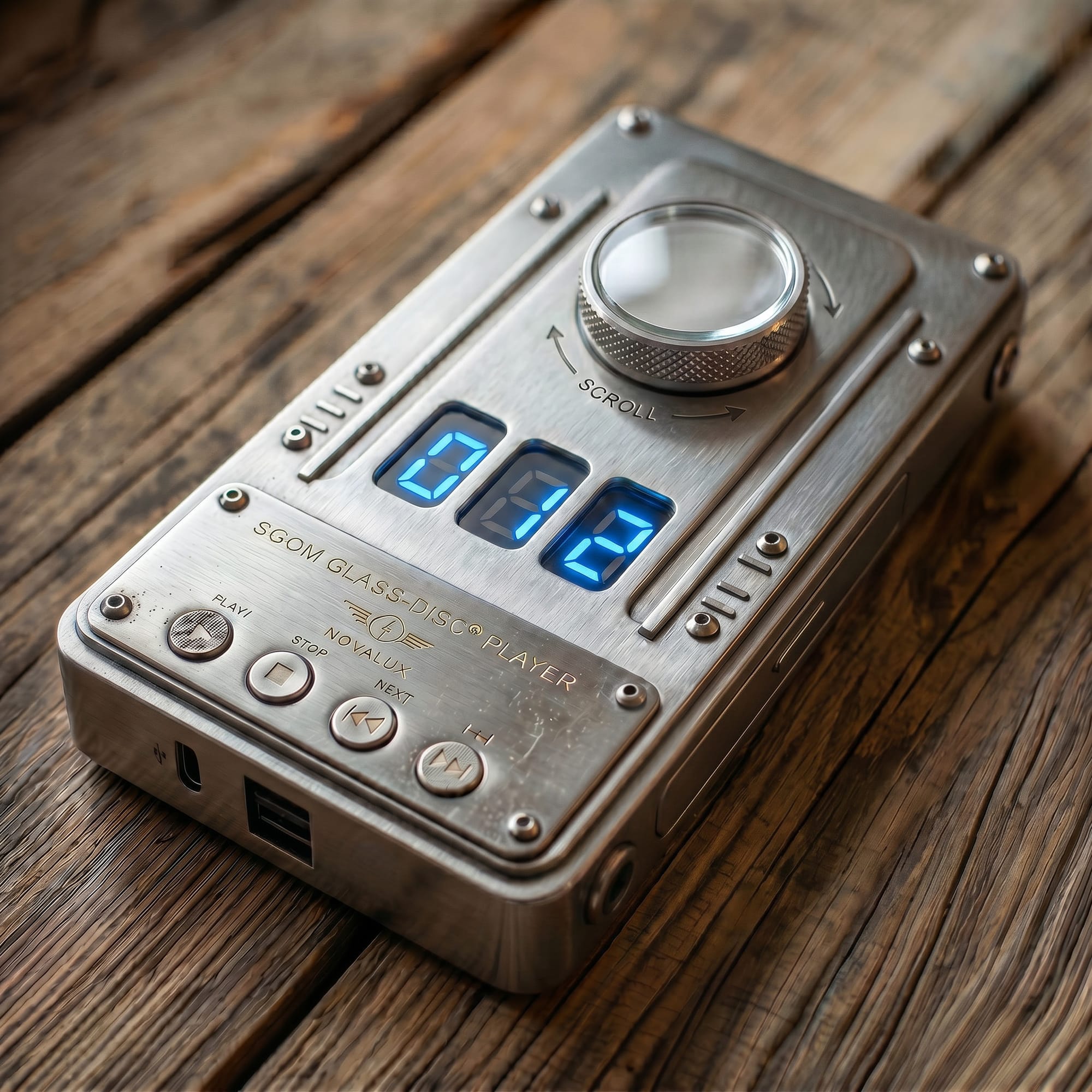
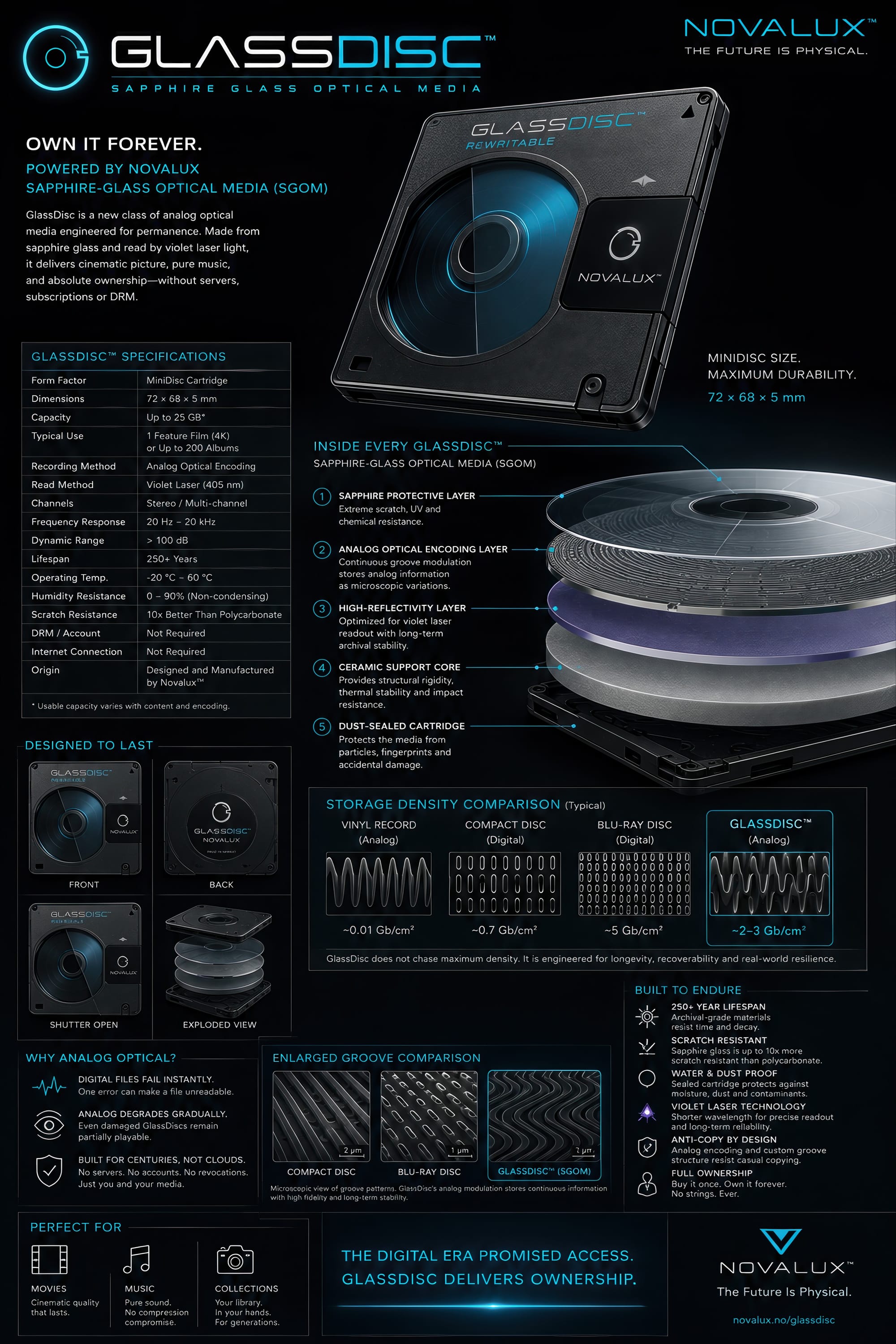
GlassDisc is the dominant consumer media format of the 2050s. Developed by Novalux and based on Sapphire-Glass Optical Media (SGOM), it emerged in response to growing dissatisfaction with cloud-based distribution, digital rights management (DRM), piracy, and the increasing fragility of purely digital ownership.
During the late 2020s and 2030s, consumers became increasingly frustrated by a series of highly publicized incidents involving disappearing digital purchases, account lockouts, subscription-only services, and the loss of personal data. Family photo collections vanished when cloud providers shut down. Movies and games disappeared from online storefronts after licensing disputes. Users lost access to entire libraries of purchased content after being locked out of accounts or when companies ceased operation.
 Povel Vieregg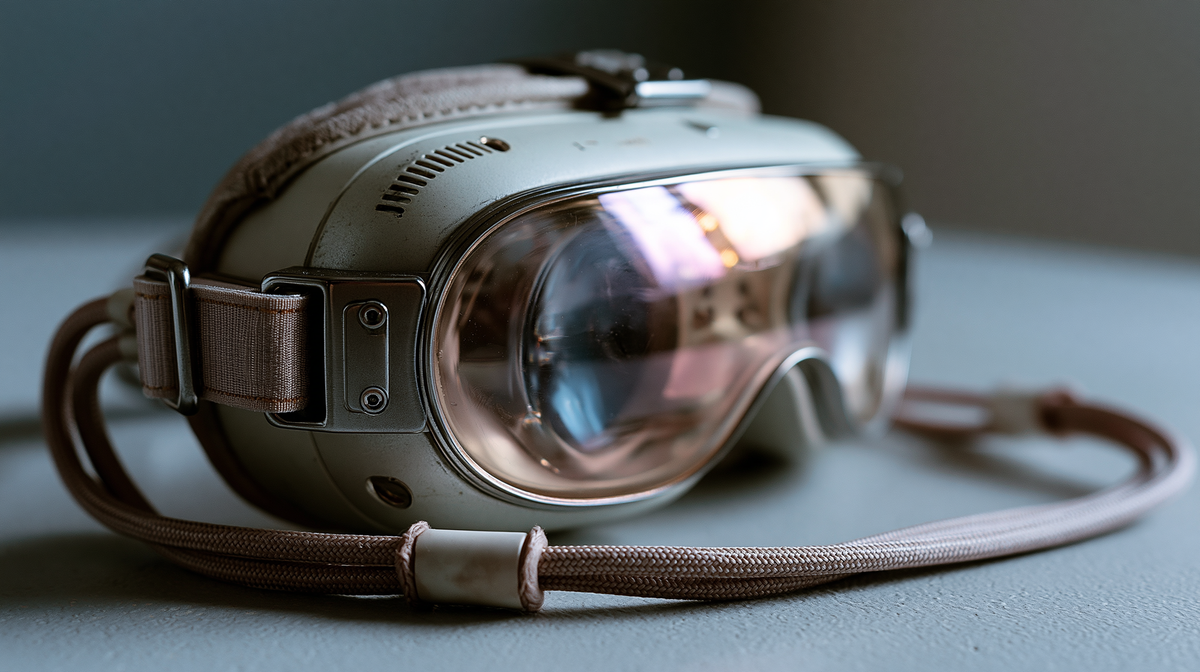
At the same time, piracy became increasingly difficult to combat. High-bandwidth networks and advanced AI-assisted copying tools made perfect duplication of digital media nearly impossible to prevent. Content creators and distributors found themselves trapped in an escalating arms race against piracy while consumers grew increasingly resentful of intrusive DRM systems.
Novalux took a different approach.
Originally developed for military, industrial, and archival storage applications, SGOM offered exceptional durability and longevity. Unlike conventional digital storage media, which could suffer catastrophic corruption, SGOM degraded gradually and remained partially recoverable even after damage. Properly stored GlassDiscs are expected to remain readable for centuries.
The success of SGOM in archival and defense applications led Novalux to introduce a consumer version known as GlassDisc.
GlassDisc cartridges are physically similar in size to the MiniDisc format of the late twentieth century. Each cartridge contains a sapphire-glass optical disc protected inside a rugged translucent shell with a sliding metal shutter. The format is compact enough to fit in a pocket while remaining robust enough for everyday use.

The return of physical media produced unexpected social consequences. Libraries, record stores, bookstores, and video rental shops experienced a revival. Physical browsing became common again. Instead of endlessly scrolling through online catalogs, people once again discovered media through shelves, displays, recommendations, and conversation.
Supporters of GlassDisc argue that the format represents a healthier relationship between humans and technology. Rather than concentrating every activity into a single connected device, GlassDisc encourages focused experiences. A book is for reading. A music player is for listening. A movie player is for watching. Technology remains advanced, but is designed around human attention rather than maximizing engagement.
Today GlassDisc is regarded not as a nostalgic throwback, but as one of the defining technological successes of the mid-twenty-first century.
Weapons
Traditional weapons such as the XM256 rifles used in Neo Dixie exists. These use modern smokeless gunpowder where the bullet is bundled together with gunpowder in a cartridge. What you will often hear referred to as a round.
In firearm terminology, a cartridge and a round are essentially the same thing: a self-contained unit of ammunition including the bullet, propellant, primer, and casing
In Imperial Norway in contrast guns tend to use bullets directly. There is no cartridge. That is because they use gauss guns and combustion guns.
 Povel Vieregg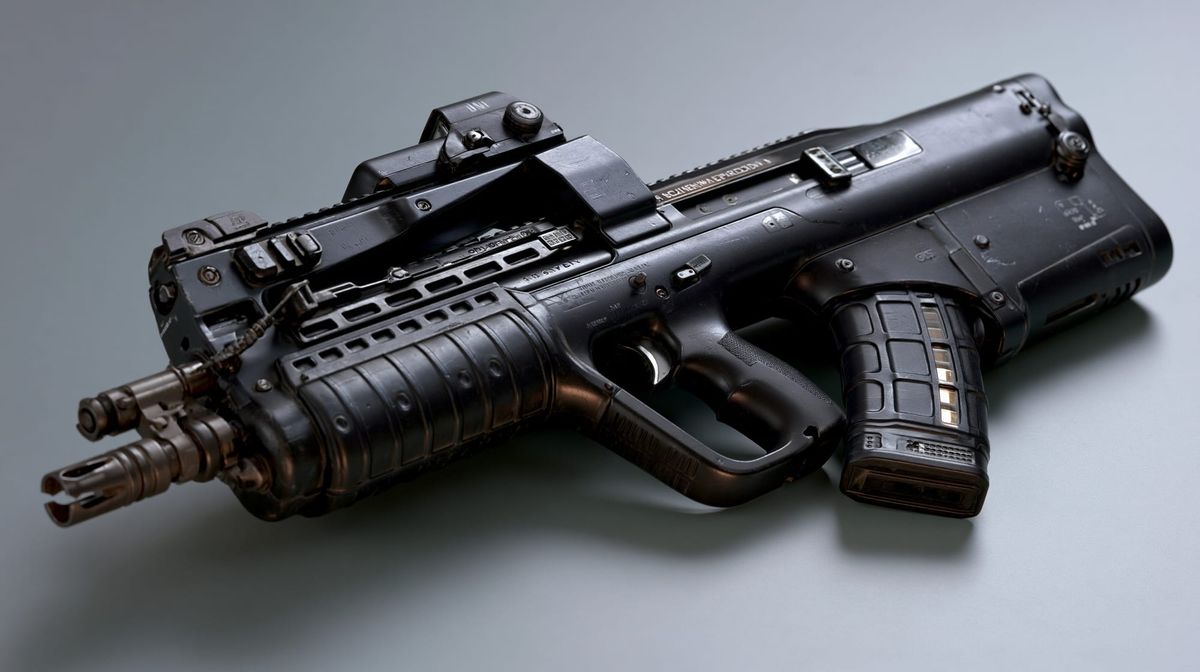
The Gauss gun (often called a Gauss rifle or Gauss cannon) is a device that uses electro magnets and the physics of the Newton's cradle to accelerate a projectile. Combustion guns vaporizes ethanol and ignites it much like inside the cylinder of an internal combustion engine. The explosion pushes out the bullets.